Guides ·
King Tut facts for kids: the boy pharaoh and his hidden tomb
Who King Tut was, how his tomb was found in 1922, what was inside, and whether the curse was real, explained simply for kids, with twelve facts to share.
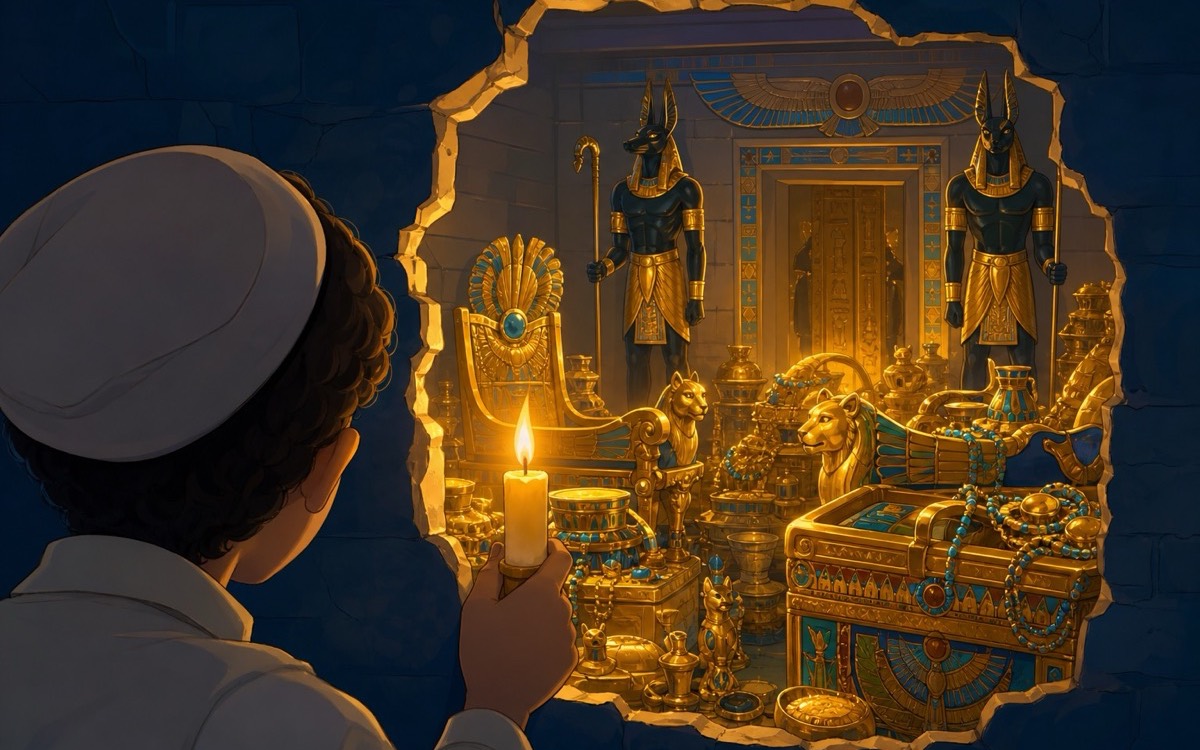
Short answer: King Tut, or Tutankhamun, was a pharaoh of ancient Egypt who became king when he was about nine years old and died at about nineteen, more than 3,300 years ago. He is famous because his tomb was found almost untouched in 1922, full of gold and treasures that had been hidden underground since the day he was buried.
Who was King Tut?
Tutankhamun lived about 3,300 years ago, during a time historians call the New Kingdom, when Egypt was one of the richest and most powerful lands in the world. He became pharaoh, which means king, when he was only a child, so grown-up advisers helped him rule.
He was born with a different name, Tutankhaten. When he was young he changed it to Tutankhamun, which means "living image of Amun". Amun was one of Egypt's most important gods. The name change was part of bringing back the old gods that the king before him had pushed aside.
Tutankhamun was not a great conqueror. He ruled for about ten years and died young, and for a long time almost nobody remembered him. That is exactly why his tomb survived.
How was King Tut's tomb found?
Egyptian kings of that time were buried in tombs cut deep into the rock of a dry valley near the city of Thebes, now called Luxor. It is known as the Valley of the Kings. Almost every tomb there had been robbed thousands of years ago.
An English archaeologist named Howard Carter believed one king's tomb was still missing: Tutankhamun's. With money from Lord Carnarvon, he searched the valley for years and found almost nothing.
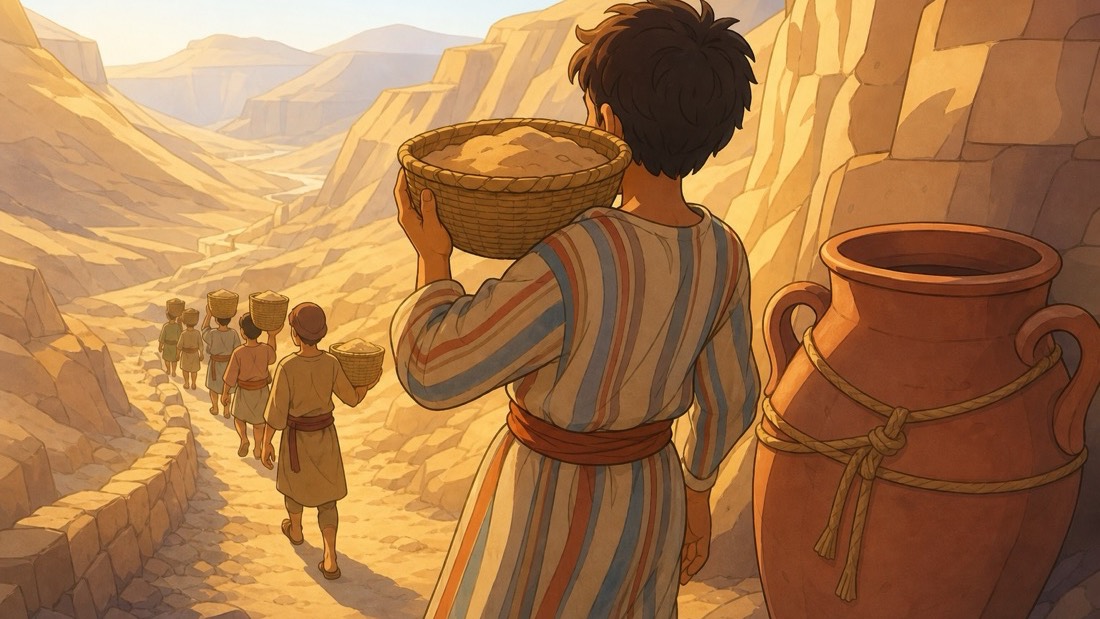
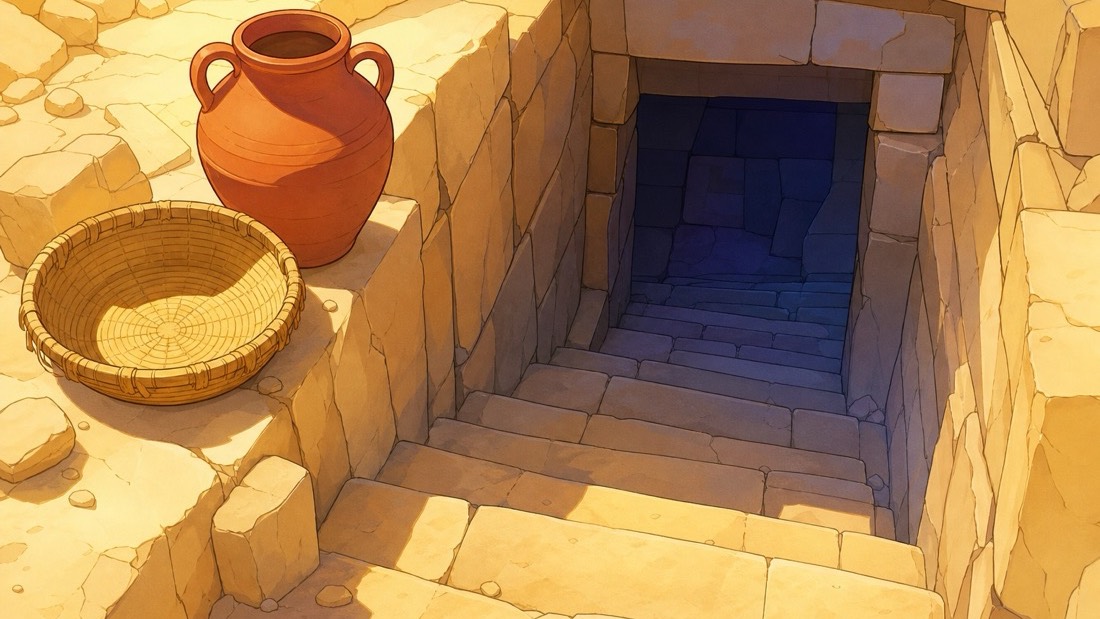
Then, on 4 November 1922, his workers uncovered a stone step under the sand, right below the huts where ancient tomb builders had once lived. A story often told is that a boy carrying water for the diggers found it. Nobody knows for sure.
There were sixteen steps down to a door sealed with plaster and stamped with royal seals. On 26 November, Carter made a small hole, held up a candle and looked in. When Lord Carnarvon asked whether he could see anything, Carter is said to have answered: "Yes, wonderful things."
What was inside the tomb?
More than 5,000 objects, packed into four small rooms. Among them:
- The golden mask that covered the king's face, made of about 10 kilograms of solid gold, with blue stripes of a stone called lapis lazuli.
- Three coffins, one inside the other. The innermost one is solid gold and weighs about 110 kilograms, as much as a grown-up and a child together.
- Chariots, beds, chairs, a golden throne, board games, clothes, sandals and boxes of food for the afterlife.
- More than a hundred walking sticks. Scientists think the young king may have had trouble with one foot.
- A dagger made from iron that fell from space. Scientists found that its metal came from a meteorite.
- Two trumpets, which were played again in 1939, more than 3,000 years after they were made.
It took Carter and his team about ten years to empty the tomb, because every object was photographed, measured, numbered and written up on a record card before anything was moved.
Why were the treasures still there?
Robbers did get into the tomb, twice, not long after the funeral. They took small things and were caught, and the tomb was sealed again. Later, rubble from building another tomb nearby covered its entrance, and workers' huts were built on top. For more than 3,000 years nobody knew the door was there.
The tomb is also surprisingly small for a pharaoh. Many historians think it was not built for him at all, and was used in a hurry when he died young.
Was there really a mummy's curse?
No. A few months after the tomb was opened, Lord Carnarvon died from an infected mosquito bite. Newspapers wanted an exciting story, so they invented a "curse" that punished anyone who disturbed the king.
But Howard Carter, the man who actually opened the tomb, lived for another sixteen years, and scientists who later looked at everyone who had been there found that they lived just as long as anybody else. The curse was a newspaper story, not a fact.
How do we know his name?
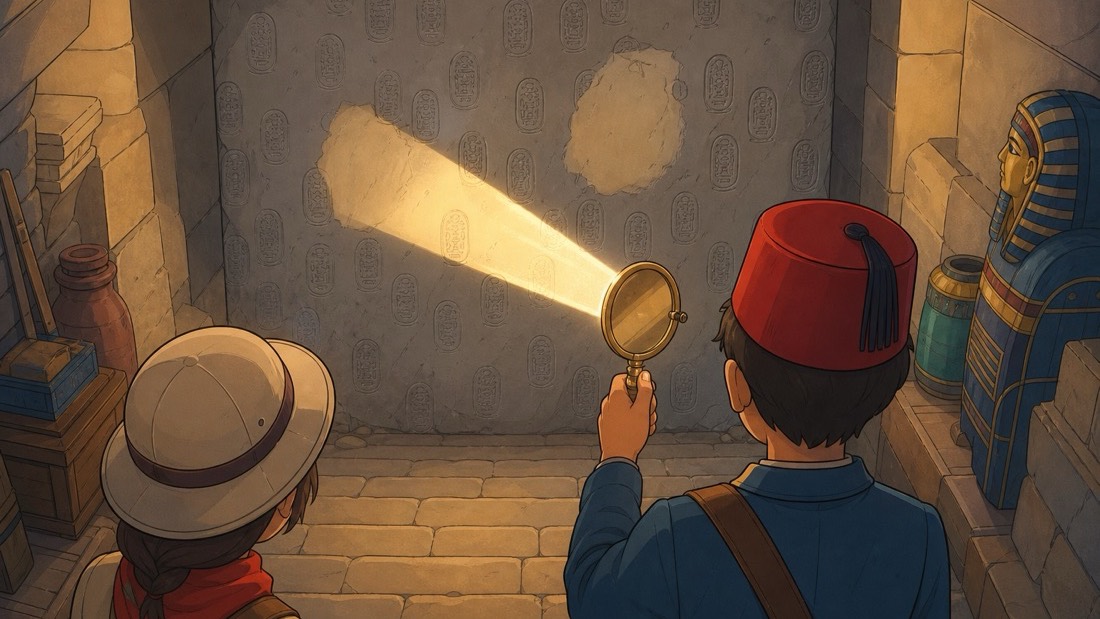
Egyptian writing used pictures called hieroglyphs. A king's name was written inside an oval with a line at one end, called a cartouche, so readers knew it was a royal name. Carter knew whose tomb he had found when he read Tutankhamun's name on the seals stamped into the door.
To the ancient Egyptians, saying someone's name kept them alive in the afterlife. In a way, King Tut is now one of the most remembered people from the ancient world.
12 King Tut facts for kids
- Tutankhamun became pharaoh at about nine years old.
- He died at about nineteen, more than 3,300 years ago.
- His name means "living image of Amun".
- His tomb is called KV62: the 62nd tomb found in the Valley of the Kings.
- The first step to his tomb was found on 4 November 1922.
- There were sixteen steps down to the sealed door.
- The tomb held more than 5,000 objects.
- His golden mask weighs about 10 kilograms.
- His innermost coffin is made of solid gold.
- One of his daggers was made from a meteorite.
- Emptying the tomb, carefully, took about ten years.
- The "curse" was invented by newspapers.
Visit the dig in a story
In our adventure King Tut's Hidden Tomb, your child is Nour, eleven years old, carrying water for the diggers in November 1922. They find the first step under the sand, read the king's name on the seals, get a cobra out of Mr Carter's house without hurting it, calm a dig frightened by talk of a curse, and help number the treasure.
The adventure says what is real and what is made up. The dates, the steps, the seals, the record cards and Howard Carter are real. Nour and the thief who spreads the curse story are invented. You can play the first moment free, no sign-up needed, or see our other history games for kids.
Roll for Wonder
A tabletop adventure your child leads.
Explore illustrated worlds, meet characters and solve problems together. Play a moment of it right now, no sign-up needed.