Guides ·
Games like D&D for kids: 10 role-playing games compared
The best role-playing games for kids aged 4 to 12, compared honestly: who runs the story, how much a grown-up has to prepare, the price and the right age.
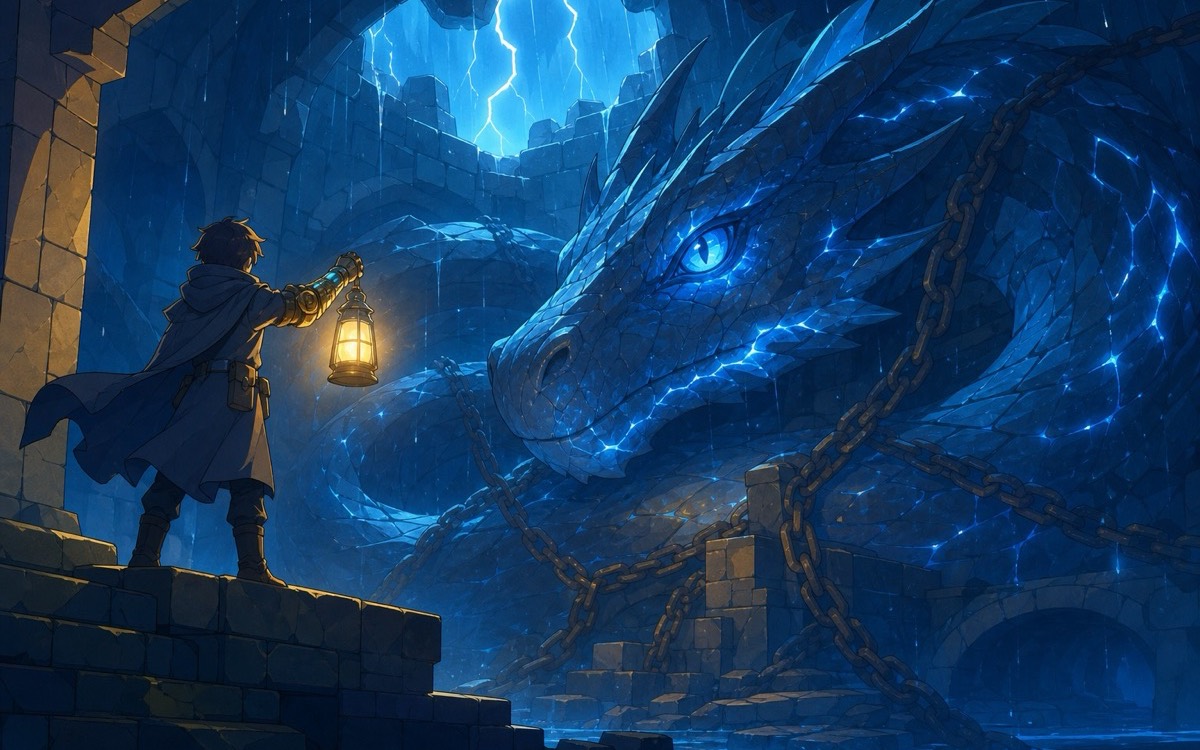
Short answer: if you enjoy telling stories and don't mind running the game, the best tabletop role-playing games for young kids are Hero Kids (cheap, from about 4) and No Thank You, Evil! (a family boxed set, from about 5). If nobody at home wants to be the game master, a storybook board game like Mice and Mystics or Stuffed Fables (from about 7) gives a similar feeling with the rules doing the work. A child who wants to play alone can start a gamebook with a die from about 8. The full Dungeons & Dragons game is labelled for 12 and up.
What makes a game "like D&D"?
Take away the rulebooks and the miniatures, and a role-playing game has four parts:
- A character the child plays: a young wizard, a mouse knight, a brave toy.
- A story with a problem in it: something lost, someone in trouble, a door that won't open.
- Choices that change what happens: "I talk to the troll", "I climb the tower instead".
- A die that decides the uncertain moments.
And there is a fifth part, the one that matters most when you choose: someone runs the story. In Dungeons & Dragons that is the game master, who describes the world, plays every other character and decides what the rules say. For a family, the real question is not "which game is best" but "who is going to do that job". So the games below are grouped by who runs them.
Which games does a grown-up run?
These are proper tabletop role-playing games, made small and friendly. A parent (or an older sibling) is the game master. They are the cheapest way in, and the best one if you enjoy it.
Hero Kids (Hero Forge Games). Made for ages 4 to 10, with only six-sided dice, ready-made hero cards and short adventures that take 30 to 60 minutes. The core rules cost less than $10 as a PDF. If you like the idea of running a game, start here: it is cheap, quick to learn and the adventures are written for you. The catch is the usual one: when the ready-made adventures run out, you buy more or write your own.
No Thank You, Evil! (Monte Cook Games). A boxed set for families, usually listed for ages 5 and up, at about $40. The rules are written for beginning readers, and the box has a "No Thank You, Evil!" token a young player can hand over when a moment gets too intense, to ask for a break or a change of tone. Good if you want everything in one box and a game that takes young children's feelings into account.
Amazing Tales (Martin Lloyd). Written for one parent and one child, from about 4. The child chooses four things their hero is good at, the best one rolls a twelve-sided die and the weakest a six-sided one, and 3 or more succeeds. There are almost no rules to learn, which makes it a lovely bedtime game. The other side of that: the grown-up invents most of the story as you go.
Little Wizards (Crafty Games). A storytelling game for about 6 to 10, where each child plays a little mage together with an animal familiar. There are no hit points and no fighting system, and the book comes with three ready tales. Good for children who prefer magic and kindness to monsters.
Which board games feel like D&D?
Here nobody has to be the game master. The players work together, and a storybook and cards tell what happens next. You lose the freedom to try anything at all, but nobody has to prepare a story.
Mice and Mystics (Plaid Hat Games). One to four players, from about 7. You are mice in a castle, playing chapter by chapter through a storybook. A big box with miniatures, usually around $75. It can be hard even for adults, so plan to help younger children.
Stuffed Fables (Plaid Hat Games). Two to four players, from about 6 or 7. The heroes are stuffed toys protecting a little girl from the monsters under her bed, and the big storybook is also the game board. Usually $60 to $70. Gentler and cosier than Mice and Mystics.
Dungeons & Dragons Adventure Begins (Hasbro). A cooperative board game for 2 to 4 players aged 10 and up, where the job of game master passes from player to player. A simple taste of the real thing, but it has been sold out in many shops, so check before you plan around it.
When is a child ready for real D&D?
Dungeons & Dragons Starter Set: Heroes of the Borderlands (Wizards of the Coast, 2025). The official way into the full game, for 3 to 5 players, labelled 12 and up, at about $50. Everything you need is in the box, but someone still has to learn the rules and run the game. That label is about the rules, not the fun: many children enjoy D&D-style stories much earlier. For what changes at each age, read D&D for kids: what age can they start?
Can a child play a role-playing game alone?
A gamebook is a solo role-playing game: the story is cut into numbered sections, the child chooses where to go next, and a die decides the risky moments. The book is the game master, so nobody has to prepare anything. Children who read on their own can play from about 8; younger ones play with a grown-up reading aloud.
Our printable gamebooks are pick-your-path stories with a hero who has three numbers, a bag of things, one six-sided die and a sheet for clues. Nobody dies, and a miss always lets the story go on. You can download the first chapter of one free. There is more on this kind of game in Solo RPG for kids.
Is there a game that runs the story for you?
Roll for Wonder is our own game, so read this part knowing that. It does one thing the games above don't: it runs the story itself, so no grown-up has to prepare. It plays in the browser on a phone, tablet or computer. The game tells the story and plays every character, your child chooses what to do or types their own idea, and a 20-sided die decides the uncertain moments. It is made for 6 to 12, adapts its words to your child's age, has no ads and no chat with other people. Each adventure is a complete story, played in as many sittings as you like.
What it isn't: it isn't free, and it doesn't replace the fun of sitting around a table while a parent does the voices. You pay per adventure or with a membership (see prices), and every adventure page has a short demo you can play free, without signing up.
How do they compare?
Prices are rough bands, because they change: $ under $15, $$ $15 to $50, $$$ over $50.
| Game | Ages | Who runs the story | Grown-up's preparation | Price |
|---|---|---|---|---|
| Hero Kids | 4–10 | A grown-up | Short rules, ready adventures | $ |
| No Thank You, Evil! | 5+ | A grown-up | Read the box rules | $$ |
| Amazing Tales | 4+ | A grown-up, for one child | Almost none, but you invent as you go | $ to $$ |
| Little Wizards | 6–10 | A grown-up | Read the book, three ready tales | $$ |
| Mice and Mystics | 7+ | The storybook | Learn a board game | $$$ |
| Stuffed Fables | 6–7+ | The storybook | Learn a board game | $$$ |
| D&D Adventure Begins | 10+ | Players take turns | Little | $$ (often sold out) |
| D&D Starter Set | 12+ | A grown-up or older child | Hours of learning | $$ |
| Gamebooks | 8+ (younger with a reader) | The book | None | $ |
| Roll for Wonder | 6–12 | The game | None | $$ per adventure, free demo |
Which one suits your child's age?
- 4 to 6: keep it to one die and one problem. Hero Kids or Amazing Tales with a grown-up, or a gamebook read aloud. For ideas on running that first game, read how to play a tabletop RPG with a six-year-old.
- 7 to 9: they start to have ideas of their own. No Thank You, Evil! or Little Wizards around the table, Stuffed Fables or Mice and Mystics if nobody wants to be the game master, or a story game that answers what they type.
- 10 to 12: mysteries with clues, choices with consequences, and gamebooks they play alone. D&D Adventure Begins is a good bridge, and a confident reader can try running a short scene for a younger sibling.
- 12 and up: the D&D Starter Set, with friends and a game master who has read the rules.
Which one should you pick?
- …you love running games: Hero Kids. It is cheap, and you will enjoy it as much as they do. Honestly, you don't need anything else.
- …you want one box for the whole family: No Thank You, Evil!
- …nobody wants to be the game master: a storybook board game, a gamebook, or a story game like Roll for Wonder.
- …your child wants to play alone: a gamebook, or a story game in the browser.
- …your child doesn't love reading: short pages and real choices help. Read how story games can make a child want to read.
Can you try one tonight, free?
You don't have to buy anything to find out whether your child likes role-playing. Our free D&D-style one-shot for kids is a short adventure you can run in an hour with one die and a pencil. Or play the first moment of a Roll for Wonder adventure, no sign-up needed, and see the rest on all adventures.
Roll for Wonder is an independent game and is not affiliated with Dungeons & Dragons or Wizards of the Coast. The other games named here belong to their publishers; we have no connection with any of them.
Roll for Wonder
A tabletop adventure your child leads.
Explore illustrated worlds, meet characters and solve problems together. Play a moment of it right now, no sign-up needed.